
Executive Summary
The global push for sustainability and circularity is undergoing a fundamental shift, transitioning from a landscape of voluntary, self-reported initiatives to one of mandatory regulations. This report provides a comprehensive analysis of two pivotal frameworks that are at the forefront of this transformation: the European Digital Product Passport (EU DPP) and the United Nations Transparency Protocol (UNTP). The EU DPP is a landmark regulatory mandate designed to enhance product transparency and accelerate the circular economy within the European Union. In contrast, the UNTP is a global, open-source technical protocol that provides a decentralized and interoperable framework for data exchange. This analysis asserts that these two initiatives are not competitive but are, in fact, strategically complementary. The UNTP offers a practical, scalable, and technically robust solution for businesses to navigate and achieve compliance with the EU DPP and other similar emerging regional regulations, thereby transforming what could be a burdensome compliance cost into a significant, long-term strategic advantage.
Chapter 1: The New Imperative for Supply Chain Transparency
1.1 The Unsustainable Status Quo: Greenwashing and a Crisis of Trust
In recent years, the demand for clear and reliable environmental, social, and governance (ESG) information has grown exponentially among consumers, investors, and regulators. This heightened scrutiny has brought to light a significant credibility gap within the current system of sustainability reporting. Extensive research, including a study by the European Commission, reveals that greenwashing is an « endemic » problem, with a concerning number of green claims being either vague, misleading, or entirely unsubstantiated. Reports indicate that as many as 53% of green claims may be based on vague or unfounded information, while 40% lack any supporting evidence. This widespread lack of verifiable data poses a « significant threat to sustainability outcomes » and erodes public and investor trust.
The pervasive nature of greenwashing underscores a deeper systemic failure. The issue is not merely a lack of sustainability data; rather, it is the absence of a standardized, verifiable, and secure mechanism for sharing that data across complex global supply chains. Existing systems are often proprietary, siloed, and vulnerable to tampering, making it impractical to achieve the end-to-end traceability needed for authentic claims. The widespread distortion of the market for sustainable goods has created a compelling need for a new class of top-down regulatory and technical frameworks. These frameworks are a direct market response to a clear and present trust deficit that cannot be resolved through voluntary measures alone.
1.2 Introducing the Solutions: EU DPP and UNTP
In direct response to this crisis of trust, two distinct but related solutions have emerged to redefine the landscape of global supply chain management. The first is the European Digital Product Passport (EU DPP), a regulatory framework that is a cornerstone of the European Union’s broader Ecodesign for Sustainable Products Regulation (ESPR). The EU DPP mandates the creation of a digital record for nearly every product placed on the EU market. The second is the United Nations Transparency Protocol (UNTP), a technical protocol developed by the United Nations Centre for Trade Facilitation and Electronic Business (UN/CEFACT). While the EU DPP provides the « what-to » of compliance by setting the regulatory requirements, the UNTP offers the « how-to » by providing the practical, scalable, and interoperable framework needed to achieve large-scale supply chain traceability and transparency.
Chapter 2: The European Digital Product Passport (EU DPP) Explained
2.1 Legislative Foundation and Purpose
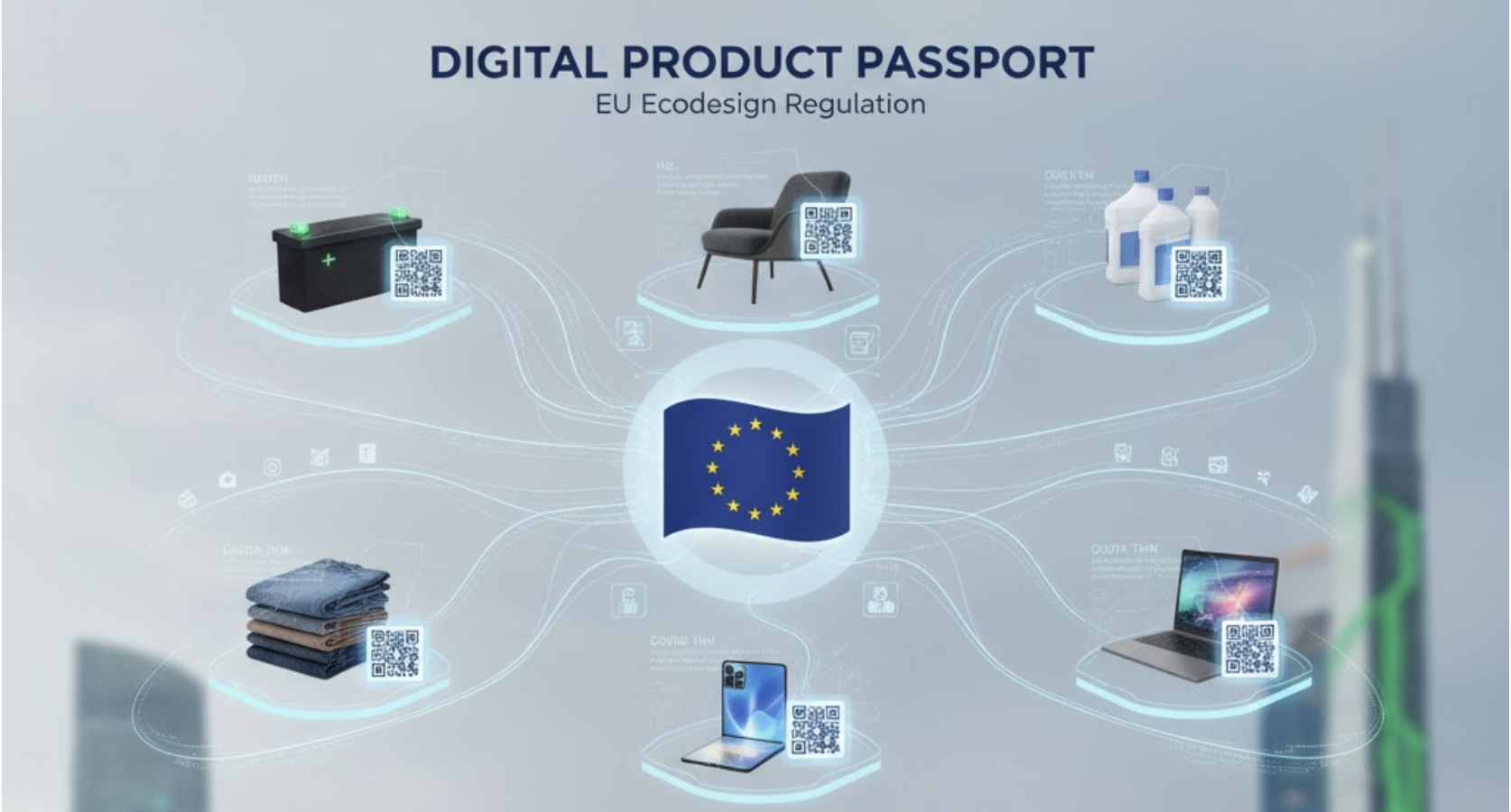
The EU Digital Product Passport is a core pillar of the European Green Deal and the Circular Economy Action Plan. Its primary purpose is to enhance product sustainability and transparency by embedding verifiable information into the core of product value chains. The framework is being established through a series of legislative acts, most notably the Ecodesign for Sustainable Products Regulation (ESPR) and the Construction Products Regulation (CPR). The DPP is intended to serve multiple goals, including bridging the gap between consumer demand for transparency and the current lack of reliable data, enabling traceability across complex global supply chains, and harmonizing data sharing practices across all EU member states.
2.2 Core Requirements and Scope
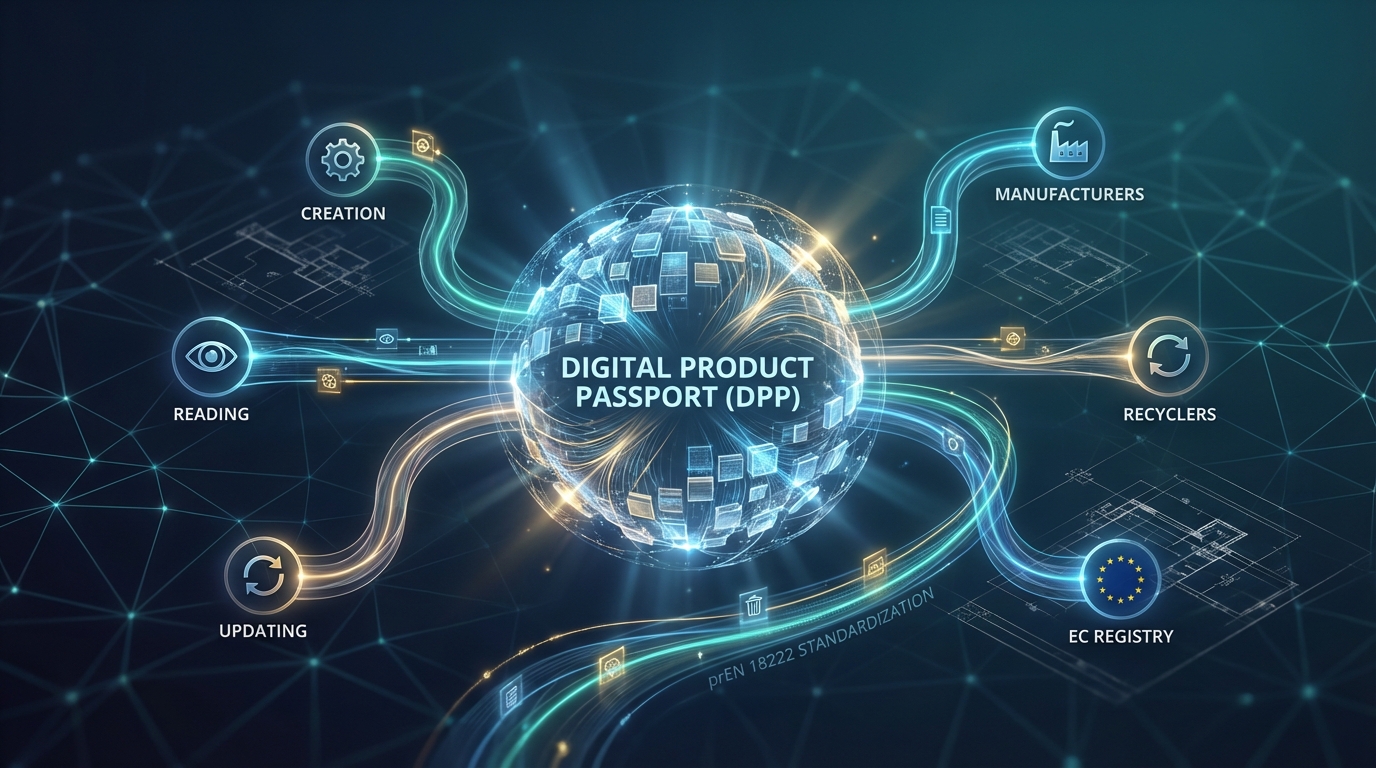
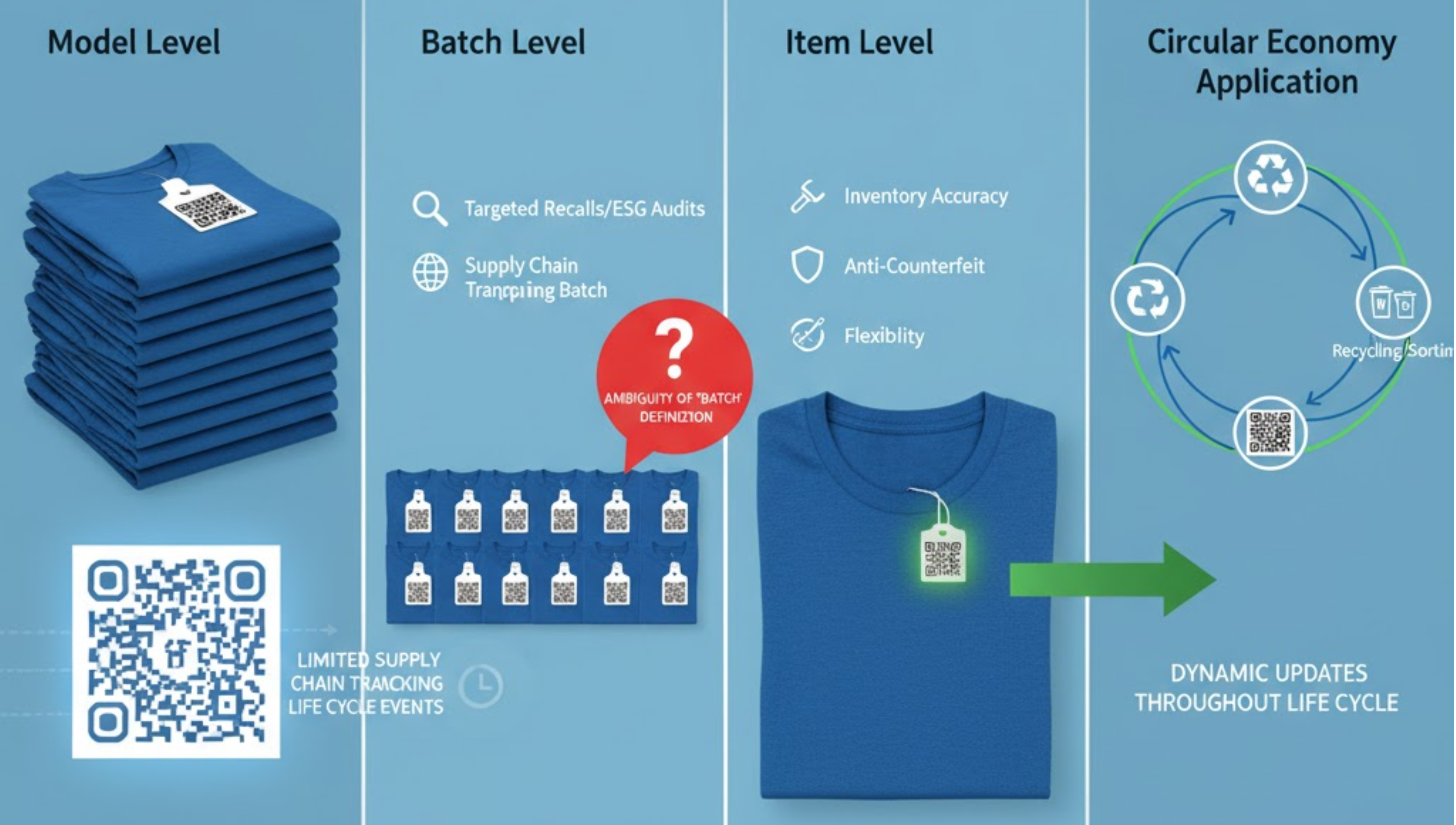
At its core, the EU DPP is a structured digital record that stores and shares essential information about a product throughout its lifecycle. This information is designed to be accessible and machine-readable via a scannable data carrier, such as a QR code or a watermark, which is placed directly on the product, its packaging, or in accompanying documentation. To be compliant with EU regulations, the data within a DPP must be structured, machine-readable, and based on open standards, making it searchable and compatible with various digital systems.
The required information includes a broad range of product attributes:
- Unique Product Identifier (UID): A unique ID linked to the product, its operator, and the manufacturing facility to enable traceability.
- Comprehensive Product Information: Details about the product’s origin, the materials used, its environmental impact (e.g., carbon footprint), and its technical performance.
- Durability and End-of-Life Guidance: Data on battery durability, repairability, and detailed instructions for recycling and repurposing.
- Legal Compliance: Information on conformity certificates, CE markings, and adherence to relevant EU regulations.
The scope of the regulation is expansive, set to apply to a wide range of product categories, including textiles, furniture, batteries, consumer electronics, and construction products. Critically, these new rules will apply to all products sold on the EU market, regardless of whether they are produced inside or outside the European Union.
2.3 Phased Implementation and Global Implications
While the EU DPP is not yet universally mandatory, it is anticipated to be adopted and mandated in a phased rollout between 2026 and 2030, with the first delegated acts for priority product groups expected to begin in late 2025. This phased approach gives industries time to adapt.
The application of the EU DPP to all products on the market, regardless of their origin, has a profound strategic implication. By leveraging the immense size of its internal market, the EU is effectively setting a new global standard for product data. For companies based in North America and other regions, the EU DPP is not simply a regional European regulation; it is an emerging, critical market access requirement. This represents a new form of non-tariff barrier, where compliance with rigorous sustainability and transparency standards becomes an essential prerequisite for international trade. Consequently, producers and suppliers across the globe are being compelled to adapt their supply chain practices and data management systems to align with EU standards, driving a broader, international shift toward greater transparency and accountability.
Chapter 3: The United Nations Transparency Protocol (UNTP) Explained
3.1 A Global Protocol, Not a Platform
The United Nations Transparency Protocol is a technical specification developed by the UN/CEFACT to help governments and industries combat greenwashing by enabling large-scale supply chain traceability. The core principle of the UNTP is « protocol over platform, » a concept that directly addresses the inherent scalability issues of many existing solutions. Traditional traceability platforms often require all actors in a supply chain to subscribe to the same software, a model that is often « not feasible or scalable » given the thousands of businesses involved in global value chains. The UNTP circumvents this limitation by providing a standardized protocol for data exchange, meaning it focuses on interoperability standards that allow « any technology platform to participate in interoperable and sustainable value chains ». This enables businesses to select the best software for their needs, as long as it conforms to the UNTP standard.
3.2 A Decentralized, Trust-Based Architecture
The UNTP’s architecture is built on a decentralized model, designed for end-to-end traceability without relying on a single, centralized database. Instead, data remains with its original owner and is linked together as needed using « decentralized events ». A key mechanism is the use of a unique product identifier, such as a QR code or barcode, which links the physical product to its digital record via a URL. This allows any subsequent party in the supply chain—from a supplier to a brand or a regulator—to access relevant data without requiring a direct system-to-system connection.
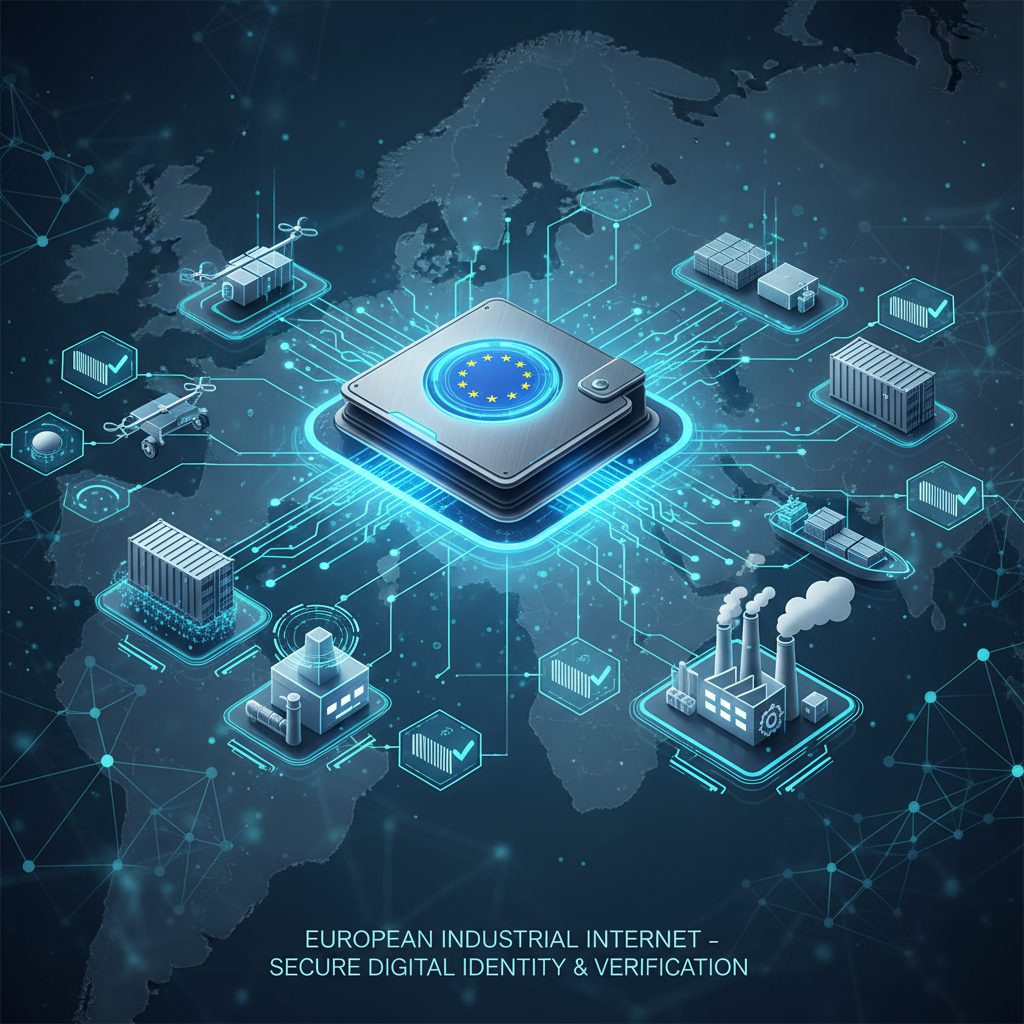
A significant challenge in achieving supply chain transparency is establishing trust in sustainability claims. The UNTP addresses this by integrating a trust-based architecture that leverages W3C Verifiable Credentials (VCs) and authoritative « trust anchors ». A trust anchor is a root source of trust, such as a certification body or regulator. By linking a Digital Product Passport’s claims to a digital credential from a trusted third party, the UNTP allows for the verification of claims without exposing underlying confidential business data. This approach establishes a robust and verifiable chain of custody for claims, combating fraud and greenwashing.
3.3 Key Components and Principles
The UNTP defines a simple yet powerful architecture with several key components:
- Digital Product Passport (DPP): A simple, lightweight passport designed to contain « just enough information » for the next step in the supply chain. This contrasts with the notion of a single, all-encompassing data record, as it respects commercial confidentiality while still enabling transparency.
- Digital Traceability Events (DTEs): These are documents that capture and describe the transformation of a product at various stages of the value chain. For example, a DTE can document how « this source material was turned into that product, » providing a crucial link in the chain of custody.
- Conformity Credentials: These are digitally verifiable documents from independent auditors or certifiers that support and verify claims made in a Digital Product Passport, such as a product’s carbon footprint or adherence to a specific regulation.
The UNTP’s architectural design is a strategic masterstroke in the face of complex global supply chains. By focusing on a decentralized, « just-in-time » data-sharing model, it directly confronts the primary commercial and logistical barriers to widespread transparency: the fear of data leakage and the impracticality of forcing all actors onto a single platform. This approach empowers each actor to « choose their own balance between confidentiality and transparency, » allowing an end-to-end picture to emerge organically from the bottom up, without requiring a central, vulnerable database or the loss of competitive secrets. It makes transparency not just a technical possibility, but a commercially viable reality.
Chapter 4: A Detailed Comparison: EU DPP vs. UNTP
4.1 The Fundamental Distinction: Mandate vs. Protocol
The core difference between the EU DPP and the UNTP lies in their fundamental nature and purpose. The EU DPP is a mandatory regulation, a « what-to » of compliance that is enforceable by law and is tied to market access within the European Union. Non-compliance with the EU DPP can lead to significant penalties, including fines of up to 4% of global revenue for repeated non-compliance with related regulations. The
UNTP is a voluntary technical protocol, a « how-to » of implementation that provides a framework for how data should be structured, stored, and shared to enable interoperability. While a business is not legally obligated to use the UNTP, it may be the most efficient and scalable way to meet mandatory EU DPP requirements.
4.2 Key Differences and Commonalities
The following table provides a comprehensive overview of the key attributes of both frameworks, highlighting their distinct roles and shared objectives.
| Attribute | European Digital Product Passport (EU DPP) | United Nations Transparency Protocol (UNTP) |
| Origin/Authority | European Commission | United Nations Centre for Trade Facilitation and Electronic Business (UN/CEFACT) |
| Nature | Regulatory Mandate | Global Technical Protocol |
| Scope | Regional Policy with Global Reach (applies to all products on the EU market) | Truly Global Standard (a technical framework for any supply chain, anywhere) |
| Primary Goal | Enhancing Product Sustainability & Circular Economy | Combating Greenwashing through Interoperable Data |
| Legal Status | Mandatory for all products placed on the EU market (when adopted) | Voluntary, open-source standard |
| Technical Architecture | Specifies what data to include and a reliance on scannable data carriers, subject to EU acts and standards | Decentralized, protocol-based architecture. Data remains with its owner; links are created via product identifiers |
| Key Components | Unique Product Identifier (UID), structured data, scannable data carrier | UNTP DPP, Digital Traceability Events (DTEs), Verifiable Credentials (VCs), Trust Anchors |
Commonalities
Despite their distinct natures, the EU DPP and UNTP share several critical objectives and technical principles. Both frameworks are a direct response to the global problem of greenwashing and aim to enhance supply chain transparency. They both rely on the concept of unique product identifiers as a link between the physical and digital worlds. Furthermore, they share a commitment to using structured, machine-readable, and linked data to ensure that information is accessible and interoperable across different systems, ultimately redefining how product data is collected, verified, and shared.
Differences
While their goals align, their methods and reach differ significantly. The EU DPP is a market-driven regulation that compels action through legal requirements, whereas the UNTP is a technology-driven standard that enables that action through a shared framework. The EU DPP dictates what information must be provided, while the UNTP provides a flexible, secure, and decentralized blueprint for how to organize and share that information. The UNTP’s architecture, with its use of Verifiable Credentials and a « protocol over platform » model, is not a mandatory requirement of the EU DPP but represents a highly effective and strategic way to achieve its compliance goals.
Chapter 5: The Strategic Nexus: UNTP as the Key to EU DPP Compliance
5.1 The « How-To » for the « What-To »
A critical strategic insight is that the UNTP is not in conflict with the EU DPP. In fact, it is a foundational technical framework that can be leveraged by businesses to build a robust system for EU DPP compliance. The EU DPP sets the regulatory bar and defines the requirements for market access. The UNTP, in turn, provides the open-source tools and interoperability standards to help businesses clear that bar with efficiency and at scale. The relationship is symbiotic: the EU DPP provides the legal impetus for change, while the UNTP provides a practical, globally applicable solution to enable that change.
5.2 Practical Synergy: Mapping UNTP Components to EU DPP Requirements
The synergy between the two frameworks can be seen by mapping specific EU DPP requirements to UNTP’s components:
- EU DPP Requirement: Provide verifiable information on a product’s material sourcing and provenance.
- UNTP Solution: The UNTP’s use of Digital Traceability Events (DTEs) provides a verifiable chain of custody. A manufacturer can issue a DTE to document that « this source material was turned into that product ». This creates a secure, verifiable data trail that substantiates claims about origin and provides the information needed for EU DPP compliance.
- EU DPP Requirement: Ensure claims about a product’s sustainability (e.g., carbon footprint, recycled content) are verifiable and trustworthy.
- UNTP Solution: The UNTP’s use of Verifiable Credentials (VCs) and Trust Anchors allows claims in a Digital Product Passport to be digitally linked to an independent auditor or certifying body. This adds a layer of trust and evidence that is both machine-readable and tamper-proof, directly addressing the endemic problem of greenwashing. This mechanism allows businesses to substantiate their claims without revealing confidential business data.
5.3 The Future-Proofing Advantage
For businesses, the choice of a compliance strategy is a long-term strategic decision. A business that opts for a proprietary, siloed solution designed to meet only the EU DPP’s requirements risks vendor lock-in and will be forced to build or purchase new systems as other regions (e.g., in Asia or the Americas) develop their own similar regulations. By adopting the UNTP, a business invests in a single, globally interoperable framework that can be leveraged to meet multiple compliance requirements simultaneously. This transforms compliance from a fragmented, expensive, and reactive process into a unified, efficient, and proactive strategic asset, ensuring that the business is resilient and prepared for the future of global trade.
Chapter 6: Recommendations and Strategic Outlook
6.1 For Businesses: A Three-Step Plan for Action
- Step 1: Conduct a Data Maturity Assessment. The first step is to evaluate your organization’s current ability to collect, manage, and share the comprehensive data required by the EU DPP, including information on material sourcing, carbon footprint, and product repairability. Identifying data gaps early is crucial for effective preparation.
- Step 2: Adopt a Protocol-Based Strategy. Instead of pursuing a siloed, proprietary solution, actively seek out and implement solutions that are built to conform to the UNTP. This approach ensures long-term interoperability, mitigates the risk of vendor lock-in, and simplifies future compliance efforts with a single, scalable framework.
- Step 3: Transform Compliance into Competitive Advantage. The transparency enabled by a robust DPP system is not just a regulatory burden; it is a powerful strategic asset. Use the verifiable data to build deeper trust with customers, attract ESG-focused investors, and differentiate products with trustworthy and quantifiable sustainability claims. A well-executed DPP strategy can also pave the way for new revenue streams and innovative circular business models.
6.2 For Policymakers
Support for global standards like the UNTP is essential to prevent the fragmentation of the global market into incompatible data ecosystems. Aligning national and regional regulations with a universal protocol can streamline global trade, reduce compliance costs for businesses, and accelerate the achievement of sustainability goals worldwide.
6.3 For Investors
As a growing portion of global capital is being directed toward ESG assets, a company’s approach to supply chain transparency will become a key indicator of its future performance and risk profile. Investors should evaluate companies not just on their sustainability claims but on their technical readiness and strategic approach to traceability. Companies that are proactively adopting interoperable protocols like the UNTP are better positioned to manage regulatory risk, mitigate supply chain vulnerabilities, and capture the long-term value of a transparent and sustainable business model.
Conclusion
The European Digital Product Passport and the United Nations Transparency Protocol represent two sides of the same coin: the global movement toward a new era of verifiable, sustainable, and transparent trade. While the EU DPP provides the necessary regulatory impetus and defines the requirements for market access, the UNTP offers the open-source, decentralized technical framework to make that vision a scalable and practical reality for businesses worldwide. By understanding and strategically aligning with both initiatives, businesses can not only navigate the coming regulatory wave and mitigate risk but also proactively position themselves as leaders in the sustainable economy of the future. The era of unverifiable claims is ending, and the age of authenticated transparency has arrived.



Laisser un commentaire