Executive Summary: A New Paradigm for Products
The Ecodesign for Sustainable Products Regulation (ESPR) Working Plan 2025–2030 represents a pivotal and transformative step in the European Union’s journey toward a circular economy. The plan, officially adopted by the European Commission in April 2025 , serves as the first multi-annual roadmap for operationalizing the broader ESPR framework, which entered into force in July 2024. It marks a significant departure from the previous Ecodesign Directive by expanding its scope from exclusively energy-related products to virtually all physical goods placed on the EU market.
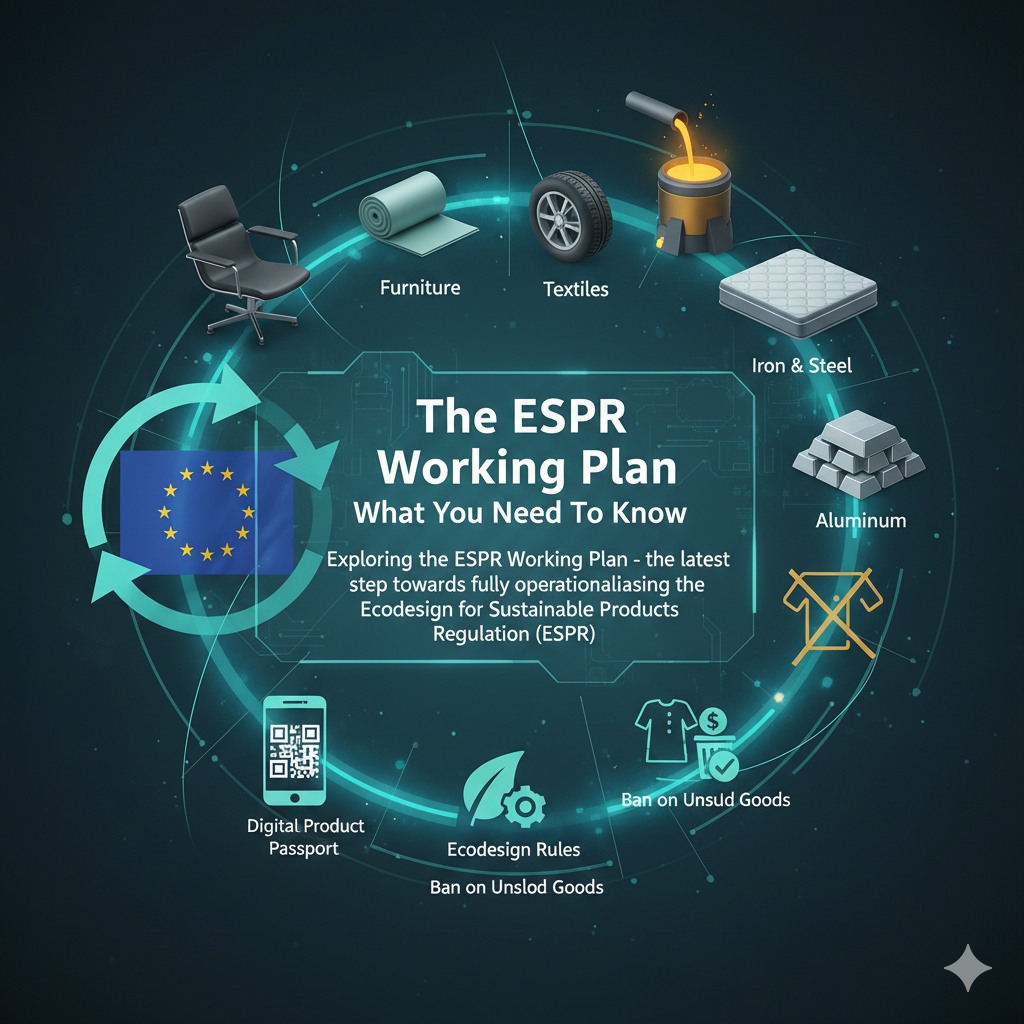
The working plan provides much-needed legal clarity and predictability for industry by defining the initial set of high-impact product groups to be targeted for new sustainability requirements. These include textiles, furniture, tyres, mattresses, iron, and steel. To achieve its objectives, the plan introduces several key mechanisms that will reshape product design and market access. Among the most critical are the mandatory Digital Product Passport (DPP), a comprehensive data carrier for product sustainability information , and the implementation of a ban on the destruction of unsold consumer goods. Additionally, the ESPR will enable the setting of mandatory sustainability criteria for public procurement, a powerful tool for steering the €1.8 trillion in annual public spending toward sustainable products.
For businesses, the Working Plan presents a dual-faced challenge and opportunity. While compliance will require significant investment in data collection, supply chain transparency, and product redesign, it also offers a strategic advantage for first-movers. Companies that embrace these changes early can enhance brand loyalty, reduce costs through material efficiency, and gain a competitive edge in an increasingly environmentally conscious global market. The plan is a strategic blueprint that not only addresses environmental challenges but also aims to boost EU industry competitiveness and create new economic opportunities in sectors like remanufacturing, repair, and recycling.
Introduction: The European Green Deal’s Cornerstone
The Ecodesign for Sustainable Products Regulation (ESPR) is a central pillar of the European Green Deal, a comprehensive agenda to make Europe the first climate-neutral continent by 2050. As a core component of the Circular Economy Action Plan (CEAP), the ESPR is designed to fundamentally transform how products are designed, manufactured, and sold within the EU. The regulation, which entered into force on 18 July 2024, replaces its predecessor, the Ecodesign Directive 2009/125/EC. This transition from a Directive to a Regulation is of critical importance. While a Directive requires individual EU member states to transpose its provisions into national law, a Regulation is a directly applicable law across all member states from its entry into force. This legal choice signals a strong, unified political commitment to establishing a single, harmonized market for sustainable products, thereby preventing the fragmentation of rules and the creation of trade barriers that could have emerged under the previous framework.
The ESPR’s ambition extends far beyond the energy efficiency focus of the old Directive. It applies to “virtually all physical goods,” with exemptions limited to a few categories such as food, feed, and medicinal products. This expanded scope reflects the understanding that approximately 80% of a product’s carbon and environmental footprint is determined at the design stage. The ESPR aims to significantly improve product sustainability by setting requirements for a wide range of characteristics, including durability, reusability, reparability, and the overall reduction of environmental and climate footprints.
While the ESPR itself provides the legal foundation, it does not set specific, product-level rules. This is the precise role of the Working Plan. As a multi-annual roadmap, the plan translates the broad ambitions of the ESPR into concrete, phased actions. The first Working Plan (2025–2030) provides clarity by prioritizing which products will be regulated first, establishing a clear timeline for the development of specific rules through delegated acts. This phased approach is intended to provide legal certainty and predictability for industry, allowing companies to prepare and invest in the necessary changes with a clear direction of travel.
The ESPR Working Plan: A Strategic Blueprint for the Circular Economy
The ESPR Working Plan is not merely a list of new rules; it is a strategic blueprint designed to accelerate the EU’s transition to a circular economy and reinforce its global industrial competitiveness. The plan is explicitly aligned with key policy initiatives, including the Clean Industrial Deal and the Competitiveness Compass. This alignment demonstrates a coordinated effort to foster innovation, attract investment, and develop « lead markets » for sustainable products within the EU. By setting harmonized standards, the EU aims to create a level playing field, reducing the administrative burden for businesses operating across the single market while strengthening the competitiveness of those offering genuinely sustainable solutions.
The framework builds on the proven success of the previous Ecodesign and Energy Labelling frameworks, which are estimated to have achieved a 12% reduction in final energy consumption in 2023. These past efforts also created an estimated 346,000 jobs and resulted in significant cost savings for households, a figure that is projected to rise to between €473 and €736 per household by 2030. The Working Plan aims to replicate and expand this success on a much larger scale, applying these benefits to a broader range of products and sustainability aspects.
The selection process for the products included in the Working Plan was rigorous and evidence-based. The Commission prioritized products with the highest potential to contribute to the EU’s climate and environmental objectives. This was informed by a detailed technical analysis, extensive public consultations, and discussions with the Ecodesign Forum, which held its first meeting in February 2025. This transparent and inclusive process aims to ensure that the regulation is both ambitious and pragmatic, balancing environmental impact with the capacity for effective implementation.
The First Wave of Transformation: Prioritized Product Groups
The first ESPR Working Plan identifies a focused set of high-impact products and intermediate goods for the initial wave of new regulations. The selection of these specific product groups is a deliberate strategy to target sectors with significant environmental footprints and high potential for circular innovation.
Final Products
- Textiles and Apparel: Ranked as the top priority, with a market size of €78 billion. The plan aims to improve product durability, material efficiency, and reduce impacts on water, waste, and climate. The ESPR’s information requirements for textiles are designed to work in synergy with the Textile Labelling Regulation, which is currently under review. Indicative adoption of delegated acts is set for 2027.
- Furniture: With a market size of €140 billion, furniture is a priority due to its material intensity and potential for circular innovation. The plan targets resource use and waste generation, aiming for a positive impact on air, soil, and biodiversity. This initiative is expected to transform the global furniture industry by requiring a shift toward more durable, modular, and easily repairable designs. Indicative adoption is slated for 2028.
- Tyres: A €45 billion market, tyres were selected for their high potential to improve recyclability and recycled content while mitigating end-of-life waste management risks. Indicative adoption is set for 2027.
- Mattresses: This €10 billion market has a high potential for improvement in waste generation, lifetime extension, and material efficiency. The indicative adoption date is 2029.
Intermediate Products
- Iron and Steel: With a market size of €152 billion, this sector is a top priority for its potential to reduce climate change factors, energy consumption, and raw material use. Regulating intermediate products like steel is a strategic move to address environmental impact at the source, upstream in the value chain. This will have a ripple effect on numerous downstream industries, including construction and automotive, which rely on these materials. Indicative adoption is slated for 2026.
- Aluminium: This €40 billion market was chosen for similar reasons as steel, with the goal of improving impacts on climate change, energy consumption, and pollution. The use of secondary materials in aluminium production can significantly reduce greenhouse gas emissions, boosting EU resilience and innovation. Indicative adoption is set for 2027.
The concurrent regulation of both final products (e.g., textiles) and intermediate products (e.g., steel) indicates a coordinated, systemic strategy to create a complete circular ecosystem. This shows a deep understanding of value chains and a desire to drive change from both the supply side and the demand side simultaneously. While other product groups such as footwear and chemicals were part of the initial longlist, they were not included in the first Working Plan due to their complexity, with feasibility studies now underway for their potential inclusion in future plans.
Table 1: ESPR Working Plan 2025–2030 – Priority Products
| Product Group | Indicative Adoption Date | EU Market Size (2021) | Key Rationale |
| Final Products | |||
| Textiles (Apparel) | 2027 | €78 billion | High potential to improve lifecycle, material efficiency, and reduce impacts on water, waste, and climate. |
| Furniture | 2028 | €140 billion | High potential to improve resource use, with a positive impact on air, soil, and biodiversity. |
| Tyres | 2027 | €45 billion | Focus on improving recyclability and recycled content; mitigating end-of-life waste risks. |
| Mattresses | 2029 | €10 billion | High potential to improve waste generation, lifetime extension, and material efficiency. |
| Intermediate Products | |||
| Iron & Steel | 2026 | €152 billion | High potential to reduce climate change factors, energy consumption, and boost EU supply chain resilience. |
| Aluminium | 2027 | €40 billion | High potential to improve climate change factors, reduce energy consumption, and boost supply chain resilience. |
Exporter vers Sheets
Core Pillars of the New Framework: Key Mechanisms and Requirements
The Digital Product Passport (DPP): The Informational Backbone of ESPR
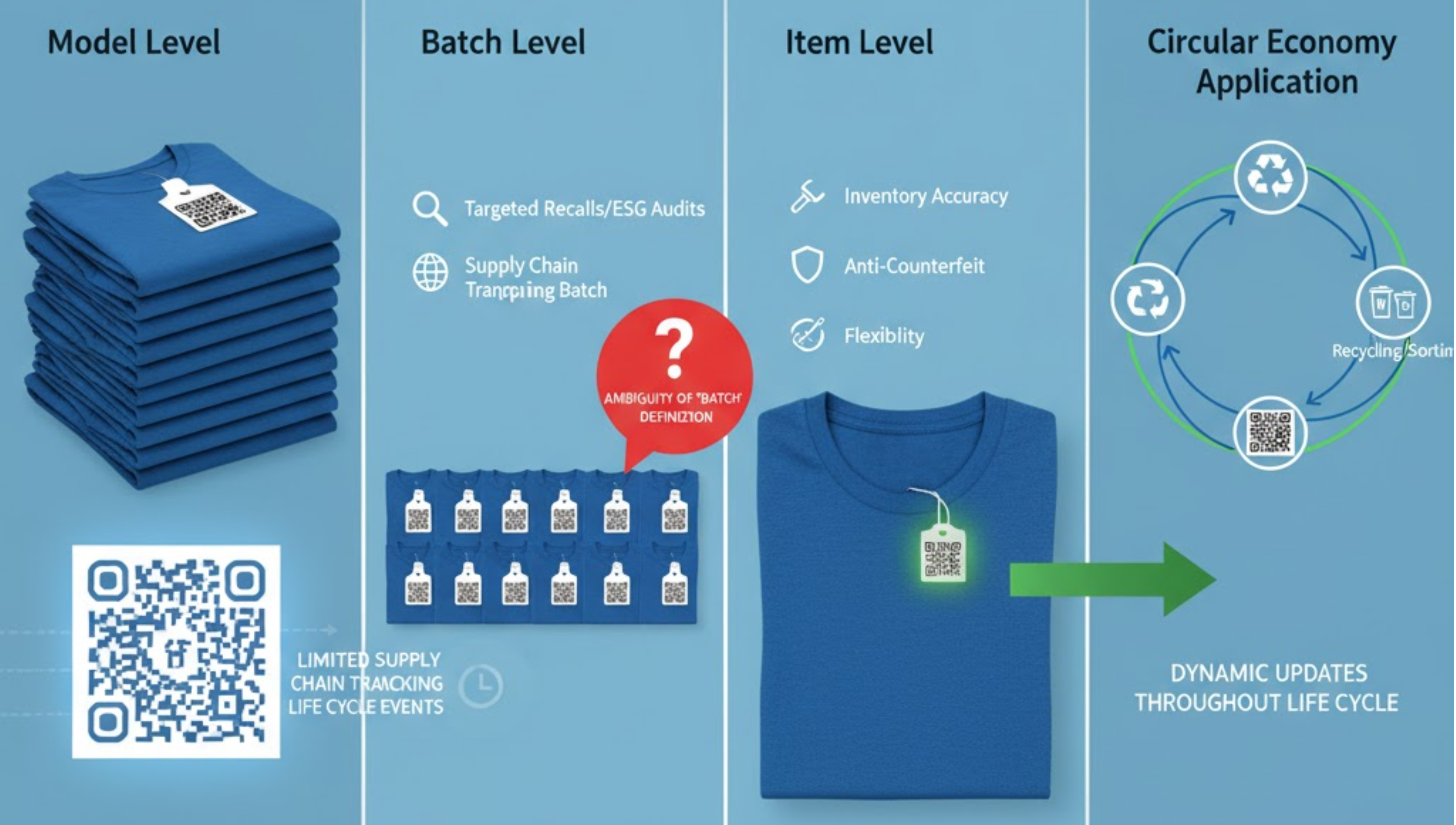
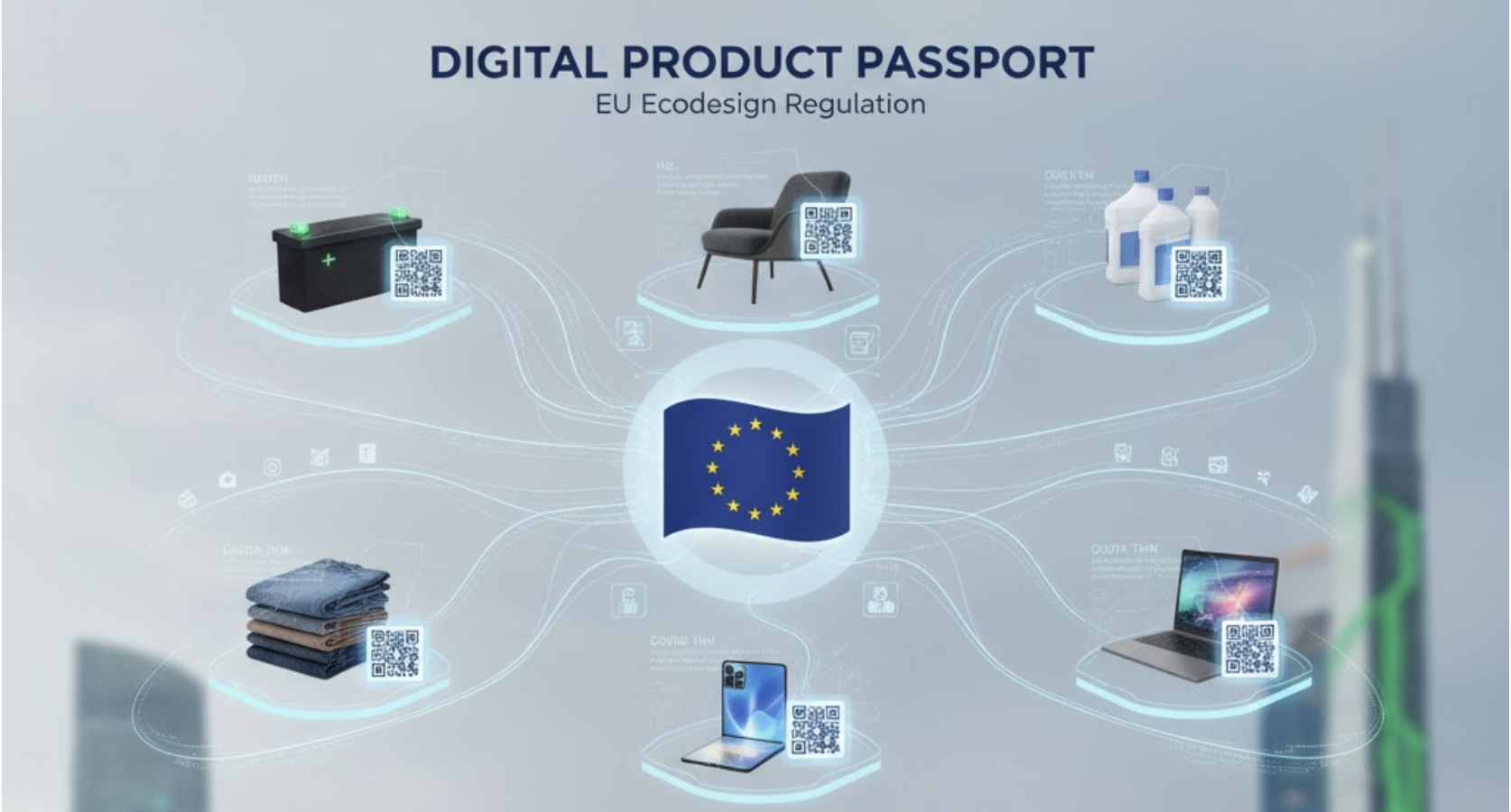
The Digital Product Passport (DPP) is a cornerstone of the ESPR, designed to create a transparent and traceable system for products throughout their lifecycle. The DPP is a mandatory, machine-readable digital ID card for a product, accessible via a data carrier like a QR code or barcode. It is a key tool for ensuring compliance and enabling all stakeholders—from manufacturers and retailers to consumers and regulators—to access crucial sustainability information. The DPP must follow open, non-proprietary standards to ensure interoperability and remain accessible for the product’s entire lifespan.
The data contained within a DPP will be extensive and tailored to each product group. While specific requirements will be detailed in future delegated acts, the general scope includes a product’s technical performance, materials and their origins, carbon and environmental footprints, durability, repair activities, and recycling capabilities. The DPP will also include information on substances of concern and instructions for disassembly and recycling.
The implementation of the DPP system and a central registry is expected to be finalized between 2026 and 2027. This is a strategically significant move for several reasons. Firstly, it moves the EU from a reactive, audit-based enforcement model to a proactive, real-time digital verification system. By making compliance data machine-readable and centralized, market surveillance authorities will be better resourced and more coordinated, enabling automated checks and more effective enforcement. Secondly, the DPP is designed to be a strategic enabler of new, circular business models. By providing improved access to data, it facilitates new opportunities for repair, remanufacturing, and resale that were previously hindered by fragmented information. This will not only empower consumers with the information to make informed purchasing decisions but will also allow businesses to gain a competitive advantage by showcasing verifiable sustainability claims.
Ecodesign Rules: Making Sustainability by Design the Norm
At the core of the ESPR are its ecodesign requirements, which are set through delegated acts and tailored to each product group. These requirements are a powerful lever to make products more durable, reliable, and circular by minimizing their environmental impact throughout their lifecycle. The regulation will address a broad spectrum of sustainability aspects, including durability, reusability, upgradability, reparability, energy and resource efficiency, and the use of recycled content.
The Working Plan also introduces a groundbreaking concept: horizontal requirements. These are rules that can be applied across multiple product groups that share common characteristics, creating a standardized framework for sustainability. The most prominent example is the development of a Repairability Score, for which a preparatory study began in April 2025. This approach is highly efficient, as it avoids the need to create a unique set of rules for every single product category. More importantly, it signals a clear and consistent expectation to all industries that reparability and recyclability will be universal requirements, encouraging fundamental shifts in product design from the ground up.
From Waste to Value: The Ban on Unsold Goods
The ESPR introduces a direct and impactful prohibition on the destruction of unsold consumer products, starting with textiles and footwear. This is a targeted measure to combat the significant waste generated by practices of overproduction and the disposal of inventory to protect brand value. The obligation to disclose information about destroyed products will apply to large enterprises starting in July 2026, and to medium-sized enterprises starting in July 2030. These companies will be required to disclose the amount and weight of products destroyed, the reasons for destruction, and the measures taken to prevent it.
This provision is one of the most disruptive elements of the regulation, as it removes a long-standing « escape route » for managing surplus stock. It forces companies to adopt circular business models by making remanufacturing, refurbishment, and resale not just an option, but an economic necessity. The staggered timeline for implementation acknowledges the greater difficulty and cost for smaller companies to adapt their logistics and inventory management systems, demonstrating an effort to balance ambitious policy with a proportionate regulatory burden.
Harnessing Market Power: Green Public Procurement (GPP)
Public authorities in the EU spend approximately €1.8 trillion annually on purchasing goods and services. The ESPR Working Plan leverages this immense purchasing power by enabling mandatory minimum sustainability requirements for public procurement. For businesses, this means that to compete for public contracts, products must meet minimum sustainability criteria, provide proof of compliance (often via the DPP), and increasingly compete on sustainability performance rather than just on price.
This policy is a powerful « demand-side » tool that complements the « supply-side » ecodesign rules. By creating a guaranteed market for compliant products, the EU is de-risking investments in new, circular business models and technologies. The Commission has stated that it will evaluate and adopt the GPP implementing acts in parallel with the product-specific delegated acts on ecodesign, ensuring a highly coordinated strategy to build a robust circular economy from both the supply and demand ends of the market.
A Roadmap to 2030: Detailed Timelines for Implementation
The ESPR framework is being implemented through a deliberate, staged process, providing businesses with a clear timeline for compliance.
Table 2: Key Milestones in the ESPR Rollout
| Date/Year | Event/Milestone | Description |
| 18 July 2024 | ESPR entry into force | The Ecodesign for Sustainable Products Regulation officially becomes law. |
| 16 April 2025 | Adoption of first Working Plan | The European Commission adopts and publishes the ESPR Working Plan 2025–2030, outlining product priorities and timelines. |
| July 2026 | Ban on destruction applies | Prohibition on destroying unsold consumer products begins for large enterprises (specifically textiles and footwear). |
| 2026–2027 | DPP rollout | The Digital Product Passport system and its central registry are finalized, with mandatory passports beginning for high-impact products. |
| 2028 | Mid-term review | The Commission reviews the Working Plan, potentially adjusting priorities and including new product groups based on new evidence and stakeholder feedback. |
Exporter vers Sheets
Delegated acts, which contain the specific ecodesign requirements for each prioritized product group, will be adopted gradually over the coming years. Each act will have a minimum 18-month transition period before its requirements become effective, giving companies time to prepare.
- 2026: Delegated acts for Iron & Steel are slated for adoption.
- 2027: Delegated acts for Textiles (Apparel), Tyres, and Aluminium are slated for adoption.
- 2028: Delegated acts for Furniture are slated for adoption.
- 2029: Delegated acts for Mattresses are slated for adoption.
- 2027–2029: Horizontal requirements, such as the repairability score, are expected to be adopted during this period.
The mid-term review scheduled for 2028 is a crucial element of the implementation strategy. This mechanism provides flexibility for the Commission to adjust its priorities, add new product groups, and ensure the legislation remains relevant and effective as market realities evolve.
Navigating the New Reality: Strategic Implications for Businesses
The ESPR is not just a regulatory hurdle but a fundamental shift that will reshape global product design, production, and supply chains. For businesses, this new reality presents both significant challenges and unparalleled opportunities.
Challenges
The primary challenges stem from the need for enhanced transparency and a redesigned approach to product management. Companies will face the administrative burden of collecting, managing, and disclosing a vast amount of product data for the Digital Product Passport. This will require a comprehensive assessment of materials, components, and their origins, extending far upstream into global supply chains. For non-EU suppliers, the regulation effectively acts as a technical barrier to market access if they fail to comply with EU standards, potentially creating a « two-tier global system » for sustainable products.
Opportunities
Conversely, the ESPR and its Working Plan offer a clear path to gaining a competitive advantage. The regulation provides a framework for credible, verifiable sustainability claims backed by robust data, which can be leveraged to connect with eco-conscious consumers. A recent survey found that consumers are willing to pay a premium of nearly 10% more for sustainably sourced goods. Companies that are early adopters of the new standards can become « first-movers » and secure a significant market advantage in sectors like « green steel, » aluminium recycling, and traceability technology.
Beyond consumer appeal, adopting the principles of ecodesign can lead to tangible business benefits. By designing for durability and using recycled or reused materials, companies can reduce both production and lifecycle costs. Furthermore, designing out dependency on scarce or high-risk materials enhances supply chain resilience against price volatility and regulatory restrictions. For a business, compliance with the ESPR is a strategic opportunity to rethink products from the ground up, pinpointing operational inefficiencies and unlocking new revenue streams from circular business models.
Conclusion: The Future is Circular, Transparent, and Competitive
The ESPR Working Plan is a landmark achievement that moves the European Union beyond abstract environmental goals to a clear, actionable roadmap for a circular economy. It is a strategic blueprint that addresses not only environmental challenges but also economic ones, aiming to foster innovation, strengthen competitiveness, and create a more resilient industrial base.
The implementation of this plan, with its phased timelines and focused priorities, provides a clear signal to global markets that the era of linear, « take-make-dispose » production is ending. The broad application of the ESPR to all products sold within the EU, regardless of their origin, means the EU is effectively setting a new global standard for sustainable products. This « Brussels Effect » will encourage a global circular transition and reinforce the EU’s position as a leader in climate and industrial policy.
For businesses, the analysis indicates that a passive, wait-and-see approach is no longer viable. The data shows the direction is clear, the timelines are set, and the market is ready for change. By proactively engaging with the principles of ecodesign, investing in the tools of the new framework like the Digital Product Passport, and rethinking their business models, companies can transform regulatory challenges into strategic advantages, securing their place in the sustainable economy of the future.





Laisser un commentaire